September 12, 2025 · 4 min read
Decanting 101: A Gentleman's Guide
The proper vessel, the proper motion, the proper patience. A few words on a practice too often performed in haste.
— Archibald Whitford
A bottle, once opened, has earned a moment. It has spent years — sometimes decades — in the cool, quiet custody of the cellar, and it should not be hurried from that state to the glass without the transitional grace of a proper decanting.
Begin with a clean decanter. I cannot overstate this. Residue from a previous bottling, however faint, will intrude upon the new pour with an insistence that a well-trained palate cannot ignore. Rinse with warm water, dry fully, and allow the vessel to rest for a half hour at room temperature before use.
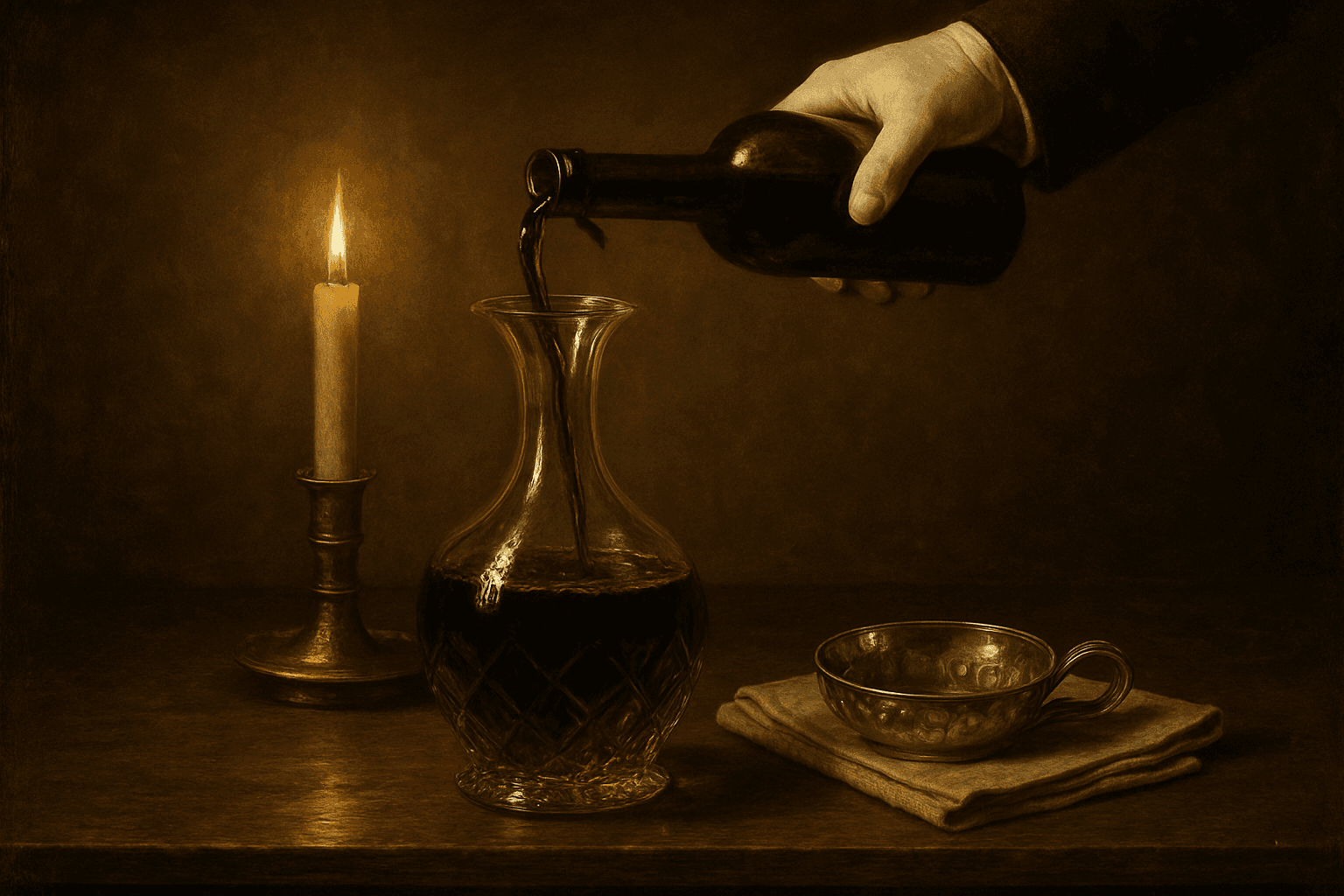
The motion itself should be slow and continuous. A held breath, if you find it helpful. Tip the bottle at a shallow angle and allow the contents to travel the curve of the decanter's shoulder — not the bottom. This is where aeration begins, and aeration is the whole point.
Allow the decanted bottle to stand for no less than fifteen minutes. A young vintage may require more. An older Grand Cru should be observed closely during this period; its character will sharpen and then settle, and the attentive host will pour at the moment of settling rather than before.
A final word: never decant hastily. The bottle has waited for you. The moment is not yours to compress.